Wednesday, August 28, 2013


German finance minister: 'I don't see' any further eurozone bailouts
August 27, 2013 -- Updated 1943 GMT (0343 HKT)
Schaeuble: Germany wants a strong Europe
STORY HIGHLIGHTS
- German finance minister: 'I don't see' any further eurozone bailouts
- Greece, Portugal, Ireland and Cyprus remain dependent on EU/IMF bailout funds
- Comments come ahead of September 22 elections for Chancellor Angela Merkel
- The 17-nation eurozone recently emerged from its longest ever recession
In a rare interview, conducted in English, he said: "If Chancellor Merkel (is) reelected I am confident that we will continue to work for a stronger Europe -- that's our general position. We don't want a German Europe but we want a strong Europe and that means every member state including Germany has to increase its competitiveness," Schaeuble said.
"A stronger Europe means that everyone has to do its duty and not to ask for more money by others -- that's the wrong way to get a strong Europe, that's the wrong incentive."

 German FM: Greece needs until 2022
  German FM: Eurozone in a better place
His comments come ahead of the September 22 election, as Merkel faces a German electorate weary of Europe's largest economy helping to bail out troubled eurozone nations, whose debt woes have threatened the stability of the currency.
 Greek unemployment hits record 27.6%
Greece, along with three other eurozone countries -- Portugal, Ireland and Cyprus -- remain dependent on rescue loans from the EU and International Monetary Fund (IMF).
The 17-nation eurozone has emerged from its longest ever recession, growing 0.3% in the second quarter after 18 months of contraction. Unemployment rates remain high, but worries that the debt crisis could spread to larger economies such as Spain and Italy -- which both saw borrowing costs climb dangerously high last year -- have abated.
"You can see if you look at the rates for sovereign debts they are stable. Markets have confidence in the stability of the eurozone as a whole. And economies are recovering in the whole of the eurozone and the average deficit has been halved in all member states of the eurozone in the last three years."
Schaeuble acknowledged that Greece will need further assistance, but said there will be no further "hair cuts" -- such as 100 billion euros in losses Greek debt holders were forced to incur last year -- for Greece or any other eurozone nation.
CNN's Nina dos Santos and Irene Chapple contributed this this report
Source: CNN Website
Monday, August 26, 2013
Famous Butlers
Ok, let's see...(Everything is based on what I have seen doesnt mean it's accurate)
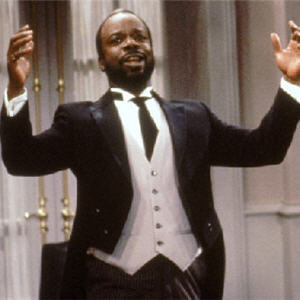
10. Geoffrey-The Fresh Prince of Bel-Air

9.Alfred-Batman
8.Mr Belvedere-Mr Belvedere

7.Lurch-Addams Family

6. Duckworth-Ducktales

5.Bertram-Jessie

Even though the show breaks on my nerves, I love Bertram.
4. Claude Faustus-Black Butler II

He WOULD get higher rating if he wasnt such a dick. [SPOILERS: *sobs* I mean, he killed ALois how dare he?!?!*sobs*]
3.
Niles-The Nanny

I came up with the idea of this article watching The Nanny,
actually. Niles is just so....Niles. I just love this guy.
2.
Mr Carson-Downton Abbey

I watched the show mainly because of him and Matthew.
1.Sebastian Michaelis-Black Butler

Ranked No1 of my list of the most Famous Butlers, Sebastian Michaelis! Butler of Ciel Phantomhive and the demon Ciel make a contract with! He also loves kittens, which is a plus! :D
So, that was it guys!
Friday, August 16, 2013
Famous Umbrellas
1. 'Singing in The Rain' umbrella.

2. The song' Umbrella' by Rihanna.

3. 'The Umbrella Academy' by Gerard Way.

4. The Yellow Umbrella from 'How I Met Your Mother'.

5. Marry Poppins' flying-able umbrella.

2. The song' Umbrella' by Rihanna.
3. 'The Umbrella Academy' by Gerard Way.
4. The Yellow Umbrella from 'How I Met Your Mother'.
5. Marry Poppins' flying-able umbrella.
Tuesday, August 13, 2013
10 Psychology Tricks You Can Use To Influence People
10
Get Favors

Trick: Get someone to do a favor for you—also known as the Benjamin Franklin effect.
Legend has it that Benjamin Franklin once wanted to win over a man who didn’t like him. He asked the man to lend him a rare book and when the book was received he thanked him graciously. As a result, this the man who had never wanted to speak to him before, became good friends with Franklin. To quote Franklin: “He that has once done you a kindness will be more ready to do you another than he whom you yourself have obliged.”
Scientists decided to test this theory and found that those who were asked by the researcher for a personal favor rated the researcher much more favorably than the other groups did. It may seem counter-intuitive, but the theory is pretty sound. If someone does a favor for you, they are likely to rationalize that you must have been worth doing the favor for, and decide that therefore they must like you.
9
Aim High

Trick: Ask for way more than you want at first then scale it back later.
This trick is sometimes known as the door in the face approach. You start by throwing a really ridiculous request at someone—a request they will most likely reject. You then come back shortly thereafter and ask for something much less ridiculous—the thing you actually wanted in the first place. This trick may also sound counter-intuitive, but the idea behind it is that the person will feel bad for refusing your first request, even though it was unreasonable, so when you ask for something reasonable they will feel obliged to help out this time.
Scientists tested this principle and found that it worked extremely well as long as the same person asked for both the bigger and smaller favor, because the person feels obliged to help you the second time and not anyone else.
8
Names

Trick: Use a person’s name, or their title depending on the situation.
Dale Carnegie, the author of How to Win Friends and Influence People, believed that using someone’s name was incredibly important. He said that a person’s name is the sweetest sound in any language for that person. A name is the core part of our identity, and so hearing it validates our existence, which makes us much more inclined to feel positively about the person who validated us.
But using a title, or form of address can also have strong effects, according to the as if principle. The idea is that if you act like a certain type of person, you will become that person, it’s a bit like a self fulfilling prophecy. To use this to influence others, you can refer to them as what you want them to be, so they will start thinking of themselves this way. This can be as simple as calling an acquaintance you want to be closer to “friend,” or “mate” whenever you see them, or referring to someone you want to work for as “boss.” But be warned: this can come off as very corny.
7
Flattery

Trick: Flattery will actually get you everywhere.
This one may seem obvious at first, but there are some important caveats to it. For starters it’s important to note that if the flattery is not seen as sincere, it’s going to do more harm than good. But researchers have studied the motivations behind peoples reaction’s to flattery, and found some very important things.
To put it simply, they found that people tend to look for cognitive balance, trying to always keep their thoughts and feelings organized in a similar way. So if you flatter someone who has high self esteem, and it is seen as sincere, they will like you more, as you are validating how they feel about themselves. However, if you flatter someone who has low self esteem, there is a chance it could backfire and cause them to like you less, because it interferes with how they perceive themselves. That, of course, does not mean you should demean a person of low self-esteem!
6
Mirroring

Trick: Mirror their behavior.
Mirroring is also known as mimicry, and is something that some people do naturally. People with this skill are considered to be chameleons; they try to blend into their environment by copying other people’s behaviors, mannerisms and even speech patterns. However, this skill can also be used consciously, and is a great way to make you more likable.
Researchers studied mimicry, and found that those who had been mimicked were much more likely to act favorably toward the person who had copied them. Even more interesting was their second find that those who had someone mimic their behavior were actually nicer and more agreeable to others in general—even those not involved in the situation. It is likely that the reason why this works is that mirroring someone’s behavior makes them feel validated. While this validation is likely to be most positively associated with the person who validated them, they will feel greater self-esteem and thus be more confident, happier and well disposed towards others.
5
Use Tiredness

Trick: Ask for favors when someone is tired.
When someone is tired they are more susceptible to everything someone may say, whether it is a statement or a request. The reason for this is that when people are tired it isn’t just their physical body, their mental energy levels drop as well. When you ask a request of someone who is tired, you probably won’t get a definite response, but probably an “I’ll do it tomorrow,” because they don’t want to deal with decisions at the moment. The next day, they are likely to follow through because people tend to keep their word; it’s natural psychologically to want to follow through with something you said you would do.
4
Offer They Can’t Refuse

Trick: Start with a request they can’t refuse and work your way up.
This is a reverse of the door in the face technique. Instead of starting with a large request, you start with something really small. Once someone has committed to helping you, or agreeing to something, they are now more likely to agree to a bigger request. Scientists tested this phenomenon in regards to marketing.
They started by getting people to express support for the rain forests and the environment—which is a fairly simple request. Then they found that once they had gotten them to express their agreement to supporting the environment, they were much easier to convince when it came to buying products that supported rain forests and other such things. However, don’t start with one request and immediately assail them with another. Psychologists found it much more effective if you wait a day or two to make the second request.
3
Keep Quiet

Trick: Don’t correct people when they are wrong.
Carnegie also pointed out in his famous book that telling someone they are wrong is usually unnecessary and does the opposite of endearing them to you. There is actually a way to show disagreement and turn it into a polite conversation without telling someone they are wrong, which strikes to the core of their ego. This is called the Ransberger Pivot, invented by Ray Ransberger and Marshall Fritz. The idea behind it is pretty simple: instead of arguing, listen to what they have to say, and then seek to understand how they feel and why. Then you explain the common ground that you share with them, and use that as a starting point to explain your position. This makes them much more likely to listen to what you have to say, and allows you to correct them without them losing face.
2
Repeat Stuff Back

Trick: Paraphrase people and repeat back to them what they just said.
One of the most positive ways to influence others is to show them that you really understand how they feel, that you have real empathy for them. One of the most effective ways to do this is by paraphrasing what they say and repeating it back to them, also known as reflective listening. Studies have shown that when therapists used reflective listening, people were likely to disclose more emotion and have a much better therapeutic relationship with the therapist.
This easily transfers over to talking to your friends. If you listen to what they say, and rephrase it as a question to confirm that you understood it, they are going to be more comfortable talking with you. They are also going to have a better friendship with you and be more likely to listen to what you have to say, because you showed that you care about them.
1
Nod

Trick: Nod a lot while you talk, especially when leading up to asking for a favor.
Scientists have found that when people nod while listening to something, they are more likely to be in agreement with it. They also have discovered that when someone is nodding a lot in front of them, it is natural for them to do the same. This is understandable because humans are well known at mimicking behaviors, especially those that they consider to have positive connotations. So if you want to be extra convincing, nod regularly throughout the conversation. The person you are talking to will find it hard not to nod themselves, and they will start to feel agreeable toward what you are saying, without even knowing it.
Source: listverse.com/2013/02/03/10-psychology-tricks-you-can-use-to-influence-people/
Monday, August 12, 2013
Summertime
Λοιπόν….Έχουμε να τα πούμε πολύ καιρό…Ελπίζω να είστε σε
διακοπές ή έστω κάπου με κλιματιστικό…

Ανακαλύψαμε καμιά δεκαριά καινούριες παραλίες ft θεία και ξάδερφος από Σαλόνικα. Είδαμε
και θέατρο (κουλτούρα βλέπετε). Συγκεκριμένα,
Ο Επιθεωρητής του Γκόγκoλ και την
Ελένη του πολύ γνωστού Ευριπίδη μας
(γιατί δεν μου έφτανε που την αναλύαμε όλη τη χρονιά στο σχολείο ήθελα να τη δω
κιόλας :Ρ). Α και τον Αγαμέμνονα του επίσης πολύ γνωστού Αισχύλου. Θα έβλεπα και το Caveman με
τον Ζήση Ρούμπο αλλά τελευταία στιγμή με έπιασε το κλασικό ‘βαριέμαι-να-αναπνεύσω’
και δεν πήγα.
Παρακαλώ ετοιμάστε το κόκκινο χαλί να περάσουμε γιατί και
εγώ και η Zoey
περάσαμε το Proficiency!!
:D
Δεν ξέρω τι παίρνουν στο Michigan οι
εξεταστές πάντως με περάσανε…
Να μαγειρεύω δεν έμαθα (βοηθός μαγείρισσας έγινα πάντως)
τίποτα δεν έμαθα, μόνο στη θεία λίγα αγγλικά την ημέρα που έμαθα πως πέρασα το Proficiency και
με είχε πιάσει μανία με την αγγλική.
Μαύρισα κιόλας, έκανε και σημάδι το μαγιό…φορούσα αυτό που
δένει πίσω από το λαιμό και στο τέλος των διακοπών κανονικά θα είχα δυο πλάγιες
άσπρες γραμμές που δεν μου αρέσουν καθόλου…Τη βρήκα όμως την άκρη και αυτά τα
σημάδια εξαφανίστηκαν.
Αγόρασα και τέσσερα βραχιόλια (τρία για τα χέρια και ένα για
το πόδι) και δεν τα έχω βγάλει από αρχές Ιούλη. Και δεν έχω καμία ιδέα γιατί
πρέπει να σας νοιάζει αυτό.
Λέω να πάω ψώνια σήμερα ή αύριο να ψωνίσω κανένα ρούχο.
Προς Θεού, οι διακοπές μου δεν έχουν ακόμα τελειώσει οι διακοπές μου, απλώς έκανα
ένα διάλειμμα από το διάλειμμα και γύρισα στο πάτρια εδάφη.
Μέχρι να με αξιώσει ο Θεός να ανεβάσω κάτι άλλο, εύχομαι σε
όλους να περάσετε ξένοιαστα το υπόλοιπο του Αυγούστου!!
Vcay
xxxxxxxxxxxxxxxxxxxxxxxx
Subscribe to:
Posts (Atom)